
News
Imagine treating a genetic disease not by managing symptoms for life, but by correcting the underlying genetic error itself. Inventors at NIH are advancing that vision with a gene editing technology designed to deliver highly precise genetic corrections, opening new possibilities for therapies that
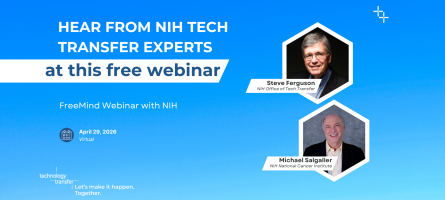
Join NIH’s Steven Ferguson and Michael Salgaller for a free webinar discussing NIH’s mission to facilitate economic development beyond grant funding on April 29, 2026 at 9:30am EST. They will be discussing NIH as a premier technology transfer partner, how the process at the NIH works, and answering
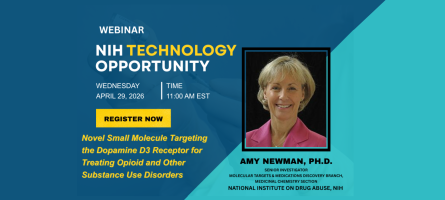
Register to attend a free NIH webinar to learn about a new non-opioid small molecule for treating opioid use and substance use disorders by selectively targeting the dopamine D3 receptor. Dr. Amy Newman and her team at the National Institutes of Health’s National Institute on Drug Abuse (NIDA)
1 in every 200 people in the US with eye-related irritation are suffering from uveitis. Prolonged use of drugs that help treat chronic uveitis can cause serious side effects such as glaucoma. Having an alternative treatment for uveitis available is imperative. NIH inventors have proposed targeting