
News
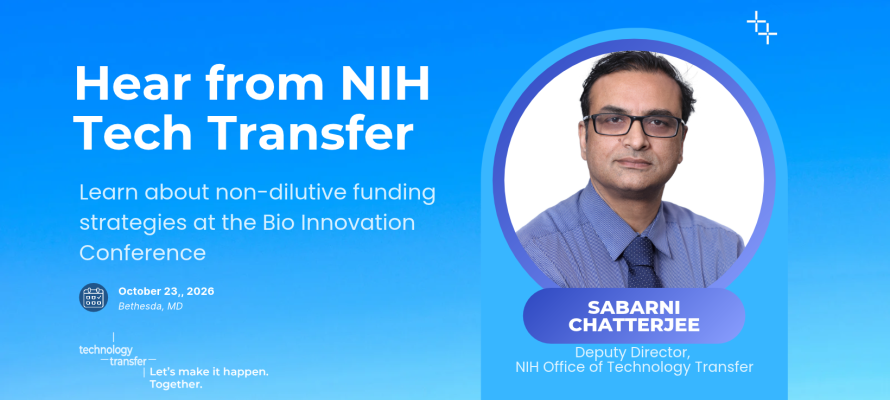
NIH OTT Deputy Director Sabarni Chatterjee will lead an interactive round table at the Maryland Tech Council’s Bio Innovation Conference focused on how you can receive non-dilutive support from the federal government without writing grants. Topics include: Partnerships providing indirect/in-kind

If you are an experienced Technology Transfer & Patent Specialist and you want to play a significant role in a dynamic organization, then consider joining the National Institutes of Health! This position is open 4/20-4/24/2026. Duties: Originate and draft complex Cooperative Research and Development

World Intellectual Property (IP) Day is April 26, 2026! This year’s theme is sports as IP is a prime driver of innovation, whether in sports or in business life. Join the Licensing Executives Society (LES) on April 24th to celebrate via a free webinar. In sports, cutting-edge equipment, team
Current cold storage solutions or methods for cells, tissues, and organs are suboptimal due to irreversible damage to cold-sensitive tissue or organ transplants that need long term storage for facilitating clinical practices. NIH inventors have developed an invention to preserve the viability of