
Machine Learning Technology for Less Invasive and Inexpensive Method to Validate Stem Cells
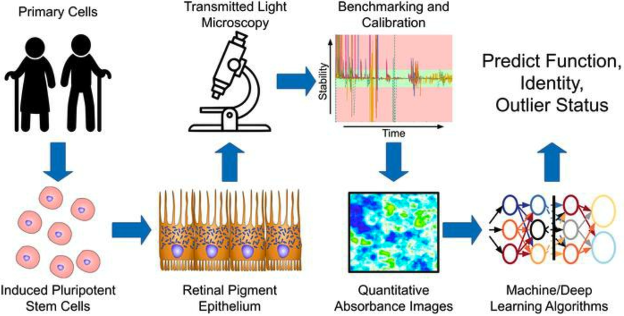
NIH inventors have developed an image-based machine learning system that is able to validate functional cell phenotypes. The system may be trained to automatically recognize image features that correlate with a desired cell-type or properties for research, diagnostic, and therapeutic purposes. This is a less invasive, scalable, and higher throughput method of validation than traditional methods, such as staining with dyes, antibodies, and nucleic acid probes which can potentially destroy stem cells and risk contaminating cells and cultures by exposing them to the environment.
This image-based machine learning system has accurately recognized retinal pigment epithelial (RPE) cells, with validated physiological function. It may also be trained to recognize numerous other cells, such as embryonic stem cells (ESC), induced pluripotent stem cells (IPSC), neural stem cells (NSC), mesenchymal stem cells (MSC), hematopoietic stem cells (HSC), and cancer stem cells (CSC).
This novel technology may have applications for cell therapies and transplants (including those that are stem cell-derived), and for validation, quality control, and cell diagnostics in many areas.
If you are interested in licensing or collaborating on this technology or wish to get in contact with the licensing manager, please view the abstract: Machine Learning and/or Neural Networks to Validate Stem Cells and Their Derivatives for Use in Cell Therapy, Drug Delivery, and Diagnostics