
News
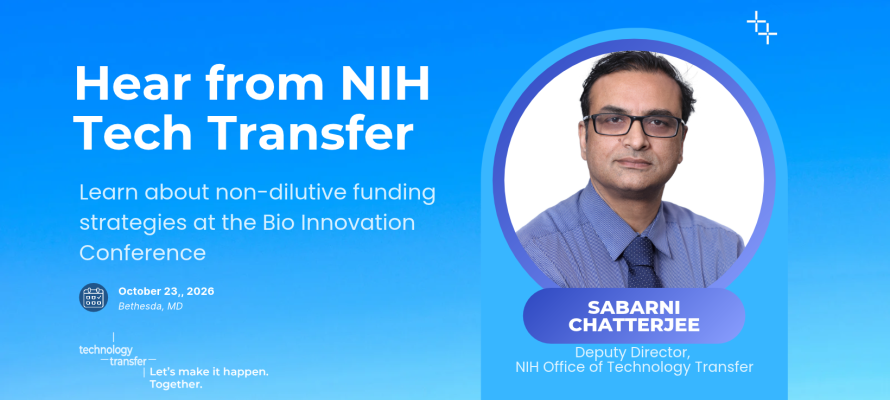
NIH OTT Deputy Director Sabarni Chatterjee will lead an interactive round table at the Maryland Tech Council’s Bio Innovation Conference focused on how you can receive non-dilutive support from the federal government without writing grants. Topics include: Partnerships providing indirect/in-kind
A promising new cancer technology from NIH could help improve how liver cancer is diagnosed and treated. Liver cancer, particularly hepatocellular carcinoma (HCC), remains one of the deadliest cancers worldwide, and better treatment options are urgently needed. NIH inventors have developed two fully

The “Top 10” list of best-selling gene therapies published by Genetic Engineering & Biotechnology News (GEN) in their May 2026 issue features three products based upon license agreements for technologies originating from the NIH Intramural Research Program. Featured and ranked on the GEN list are
Each year NIH Technology Transfer releases a list of the top 20 commercially successful products based upon license agreements for inventions made by the NIH Intramural Research Program. The list is broken down into four categories: vaccines and therapeutics, diagnostics, instrumentation and devices