
News
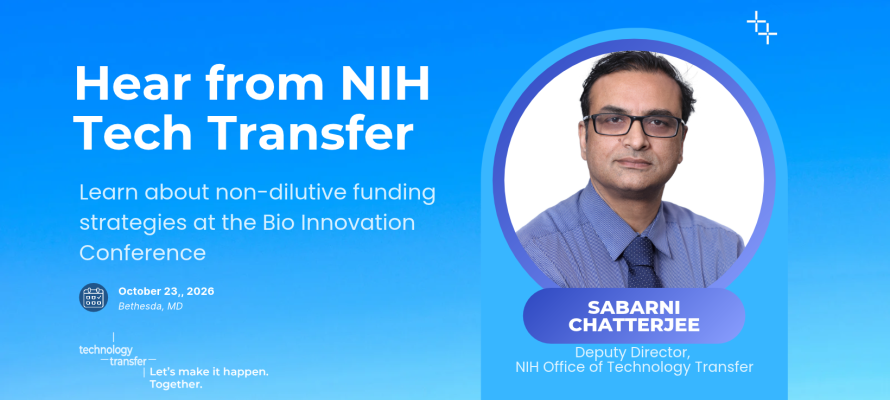
NIH OTT Deputy Director Sabarni Chatterjee will lead an interactive round table at the Maryland Tech Council’s Bio Innovation Conference focused on how you can receive non-dilutive support from the federal government without writing grants. Topics include: Partnerships providing indirect/in-kind
The Eunice Kennedy Shriver National Institute of Child Health & Human Development (NICHD) is seeking research co-development partners and/or licensees for a newly developed wearable, wireless device and protocol for continuously monitoring the placental oxygenation levels, multiple physiological

Are you interested in making an impact on the improvement of global health? Are you interested in working in a dynamic organization that values its employees and offers work-life flexibility? The National Institute of Allergy and Infectious Diseases (NIAID), Technology Transfer and Intellectual
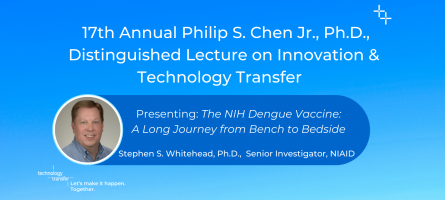
The 17th Annual Philip S. Chen Jr., Ph.D., Distinguished Lecture on Innovation and Technology Transfer will be held on Friday, September 25, 2024 at 10 a.m. ET in the Masur Auditorium in Building 10. The Chen lecture was established in 2006 by the NIH Deputy Director for Intramural Research and the