
Licensing/Collaboration Opportunity: Preservation Storage Solution for Cold-Sensitive Neural Cells
Current cold storage solutions or methods for cells, tissues, and organs are suboptimal due to irreversible damage to cold-sensitive tissue or organ transplants that need long term storage for facilitating clinical practices. NIH inventors have developed an invention to preserve the viability of cold-sensitive cells, tissues, or organs at a low temperature (around 4°C). This method could also be used for a medical product for therapeutic hypothermia for treating neural injury or trauma, or for enhancing neuronal survival from axonal damage and degeneration.
This invention contains a mitochondrial uncoupling agent that reduces mitochondrial oxidation and thus protects tissues or organs from cold stress, improving preservation efficacy. It can be used alone or may supplement other types of preservation reagents. The new composition represents an improvement over currently available commercial preservation products for certain tissue types, such as Optisol™-GS corneal storage solution or CoStorSol® cold storage solution that is the current standard for liver and kidney transplantation.
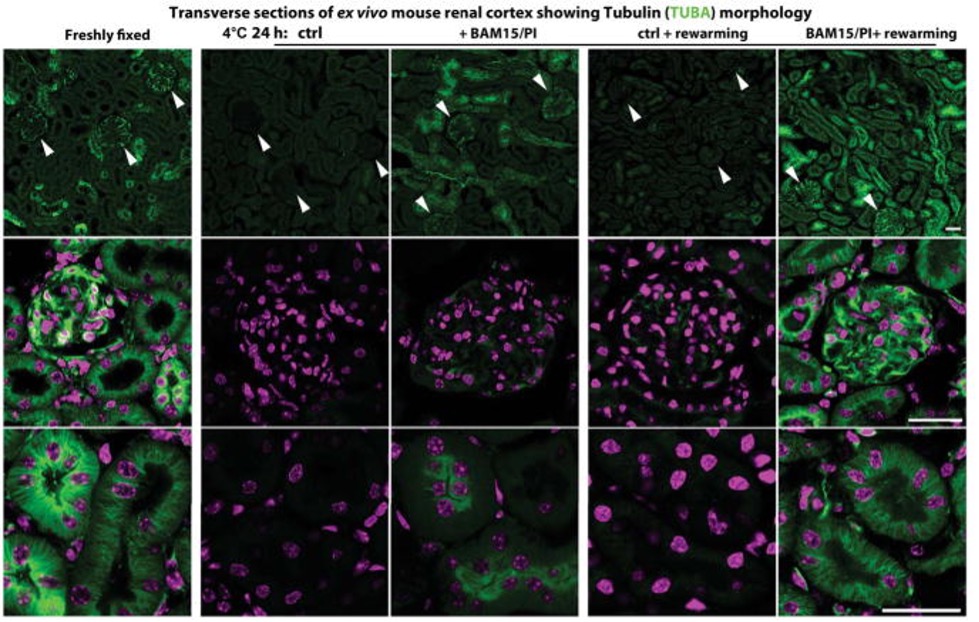
NIH is seeking licensees and/or collaborations with commercial partners to develop the new composition into preservation products that can be used in research or variable clinical practices such as therapeutic hypothermia, transplantation, and physical neural injuries.
For more information, including figures showing cells post cold storage and rewarming, please view the abstract: Strategies to Protect Mammalian Neural Tissue Against Cold and Potentially Other Metabolic Stresses and Physical Damages