
Artificial Intelligence Diagnostic Tool Available to Predict the Risk of Age-Related Macular Degeneration
Age-related macular degeneration (AMD) affects approximately 200 million people worldwide and is the leading cause of blindness in all developed countries. Identifying eyes at high risk of progression to late-stage AMD would allow timely medical treatments, lifestyle interventions, more tailored home monitoring, and improved clinical trials for patients.
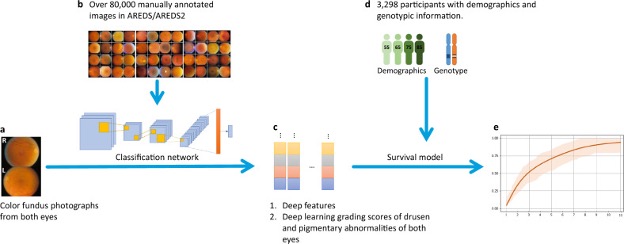
NIH inventors have used artificial intelligence (AI) to predict the risk of progression to late-stage AMD using over 80,000 images from almost 3,300 patients from the Age-Related Eye Disease Studies, AREDS and AREDS2. Using independent test data, the deep learning algorithm produced a 5% higher prognostic accuracy compared to existing clinical standards, AREDS Simplified Severity Scale, and the Casey AMD online calculator.
This approach is superior to other diagnostic methods:
| AI Diagnostic Tool | AREDS Simplified Severity Scale |
|
|
|
|
|
|
A fully automated device that contains this novel image processing method has also been developed.
If you are interested in learning more about this technology or contacting the licensing manager, please view the abstract: Using Artificial Intelligence to Predict the Risk of Age-Related Macular Degeneration