
Licensing/Collaboration Opportunity: Device for Improved Tissue Cryopreservation, Transport, and Recovery
Conventional cryopreservation of three-dimensional tissue constructs can have several problems:
- They can suffer damage from tensional stresses experienced during expansion and contractions that occur during freezing and thawing.
- Uneven physical changes within the tissue during cooling or warming can damage the tissue.
- Conventional cryopreservation media can be toxic to the tissues in a non-frozen state and can render the tissues not suitable for later recovery, culturing, and transplantation in engineered cell and other tissue therapies, and
- The sterility of the tissue during the thawing process is usually compromised.
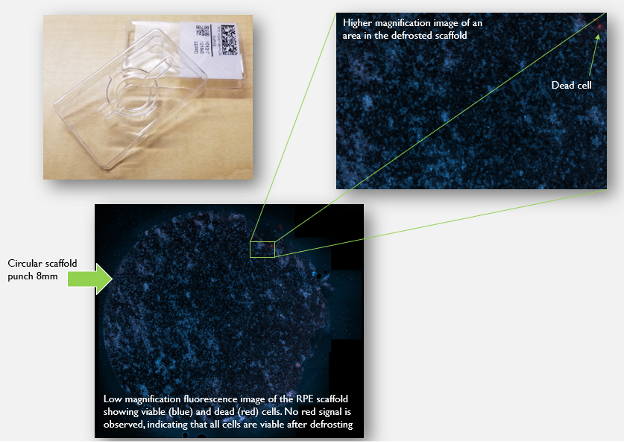
To combat these issues, NIH inventors have developed a closed recovery device consisting of three chambers that allow for the separation of media and frozen tissue until it is time to defrost. The top portion is a media chamber controlled by a valve/lumen, the middle chamber houses the frozen tissue, and the bottom chamber is a waste receptacle. The recovery device can be placed in a regulator apparatus that facilitates thawing and warming of the frozen tissue/cryopreservation media inside the tissue container.
Commercial applications of this device include:
- Transport, storage, and recovery of cells and tissues for in-vitro culture
- In-vivo experiments including cell therapy transplantation
If you are interested in licensing or collaborating with the inventors on this technology, you can find more information on the abstract: Devices for Improved Tissue Cryopreservation and Recovery